Guides
Agentic Checkout API: Let an AI Agent Buy Anywhere (2026)
Which API lets an AI agent complete checkout? ACP Instant Checkout vs retailer purchasing APIs, and how agents buy at Amazon, Walmart, and Target.

Zinc is a checkout API for AI agents: the agent sends a product page URL and a shipping address, and Zinc places the order at the retailer and returns the order number, tracking and any return through the same API. It works at Amazon, Walmart, Target, Best Buy and thousands of other stores, over REST or an MCP connector, paying per order, with no merchant integration required.

 waitingidle
700,000+ orders a year$30M+ in goods delivered1B+ API calls served
The model finds the product. Then something has to pass the login, survive the CAPTCHA and type a card. Here is where every agent team gets stuck.
The cart
The model finds the product. Then something has to pass the login, survive the CAPTCHA and type a card.










The API
Retailers do not expose a buying endpoint, so every agent team rebuilds a browser automation that breaks on the next redesign.
Your order has shipped!
no-reply@retailer.com
Delivery update — action req…
tracking@carrier.io
Return window closing soon
no-reply@retailer.com
Your package was delivered
updates@carrier.io
Refund processed for item…
no-reply@retailer.com
Your order has shipped!
no-reply@retailer.com
Delivery update — action req…
tracking@carrier.io
Return window closing soon
no-reply@retailer.com
Your package was delivered
updates@carrier.io
Refund processed for item…
no-reply@retailer.com
After
A browser session ends at checkout. Tracking, delivery and returns are left to the user to chase.
Every agent demo ends at the same wall: the model has found the right product, and now something has to put it in a cart, pass the login and enter a card. Zinc is the API on the other side of that wall, at Amazon, Walmart and thousands more; the checkout API guide compares it with ACP. More than 30 teams build agents on it today.
01 · Order
One request: the product page URL, a shipping address and the most to pay. Zinc places the order on a managed retailer account and answers with the order number, never a screenshot.
02 · Spend
The most the agent may pay rides on each order. Zinc checks it against the live retailer total at checkout; over it, the order is not placed and the agent gets the reason as a named error.
03 · Pay
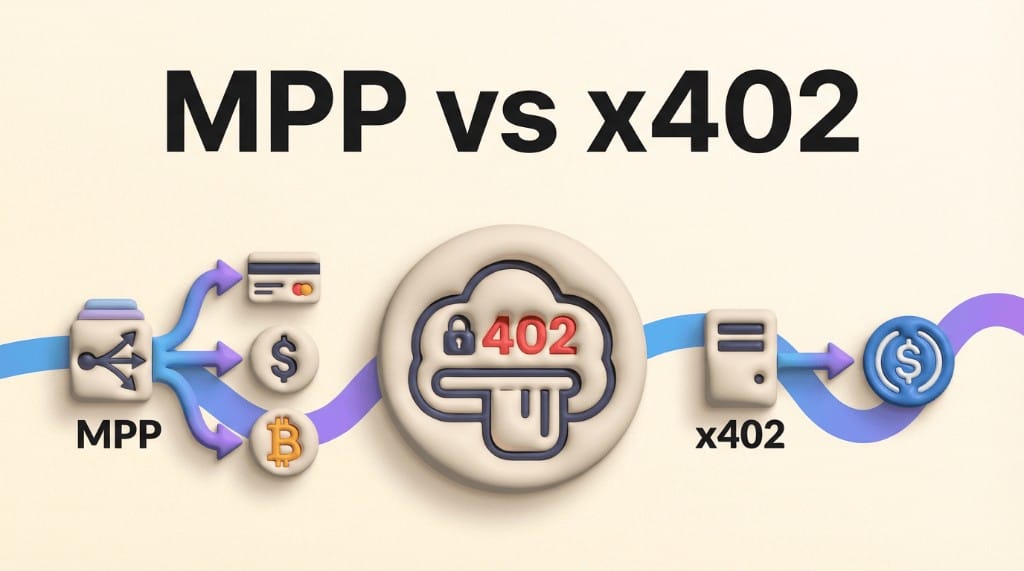
The order comes back as an HTTP 402. The agent settles it over MPP or x402, in USDC on Base or Solana, on Tempo, or by card through Stripe. Or it hands a hosted checkout to a person for sign-off.
04 · Track
The agent registers its own webhook endpoint through the API, and placed, shipped, delivered and returned arrive there as events it can act on. The user gets a public tracking page.
Generate return labels and initiate returns programmatically — no support tickets, no coordination, no delays.
05 · Return
Open a return against the order and follow it to the refund, through the same API that bought it.

 mcmasterdelivered$1,640.00amazonshipped$4,600.00
 graingershipped$5,910.00walmartprocessing$4,560.00
 ulineprocessing$1,150.00
 zoroprocessing$682.50homedepotprocessing$2,061.00graingerprocessing$1,782.00ulineprocessing$1,494.00amazonshipped$4,797.50
 staplesprocessing$2,208.00
06 · Watch
Every order an agent places shows up in a dashboard someone can check, cancel or return. Agents get autonomy; you keep the view.
A user asks for a filter for a Levoit Core 300; the agent finds it, buys it and reports back, without a card or a browser. Under the hood it is the same automated ordering API and product search any app uses.
The agent searches Zinc for the filter, picks the best offer and sends its product page URL with the user’s address.
Zinc places the order at the retailer and answers with the order number. No card, no browser and no login on the agent’s side.
Shipped, out for delivery and delivered arrive as webhooks. The agent tells the user, and a person can see every order in the dashboard.
 Zinc API

 Driving a browser through checkoutZinc API
The teams building agents on Zinc. The agents call Zinc to search, price and order. Personal assistants, shopping copilots and crypto wallets place real retail orders through the same endpoints, paying per call and per order with a ceiling on every purchase.
In numbers
Mint a sandbox key with one call, point an MCP client at the server, or let the agent pay per order with no account. Nothing to sign with a retailer.
REST
One call mints a sandbox key, no account needed. The agent searches, orders and tracks over REST from there, and goes live with a real key when it works.





MCP
Point Claude, ChatGPT, Cursor or your own agent at Zinc’s MCP server and it gets search, offers, details and ordering as tools, on the same account.
 USDC
 Solana
 Base
 Tempo
 Stripe
 x402
 MPPUSDCSolanaBaseTempoStripex402MPP
Pay per order
Without a key, an order comes back as an HTTP 402. The agent settles it over MPP or x402, in USDC on Base or Solana or on Tempo, and the order is placed.
Or see it work first: ask Zinc AI to “Buy a replacement HEPA filter for a Levoit Core 300 and ship it to me”
With a Zinc API key, from a prepaid wallet. Without one, POST /agent/orders returns an HTTP 402 and the agent pays max_price plus $1 over the Machine Payments Protocol with Link, Tempo, or x402 in USDC on Base or Solana. Zinc refunds the difference when the order completes.
No. Orders are placed on Zinc-managed retailer accounts, which handle login, two-factor and payment. The agent sends a URL, an address and a ceiling. If a business wants orders on its own account, it saves that account once and passes its id.
max_price, checked against the live retailer total at checkout and never relaxed. Over it, the order fails with max_price_exceeded. Pair it with the price the agent just saw from search or offers and the agent cannot pay more than it quoted.
Because checkouts are built to stop automation: CAPTCHAs, two-factor prompts, layout changes and bot detection. Zinc runs the retailer checkout on managed accounts and returns a named result, so the agent reasons over JSON instead of screenshots and your cost is $1 an order instead of minutes of compute per attempt.
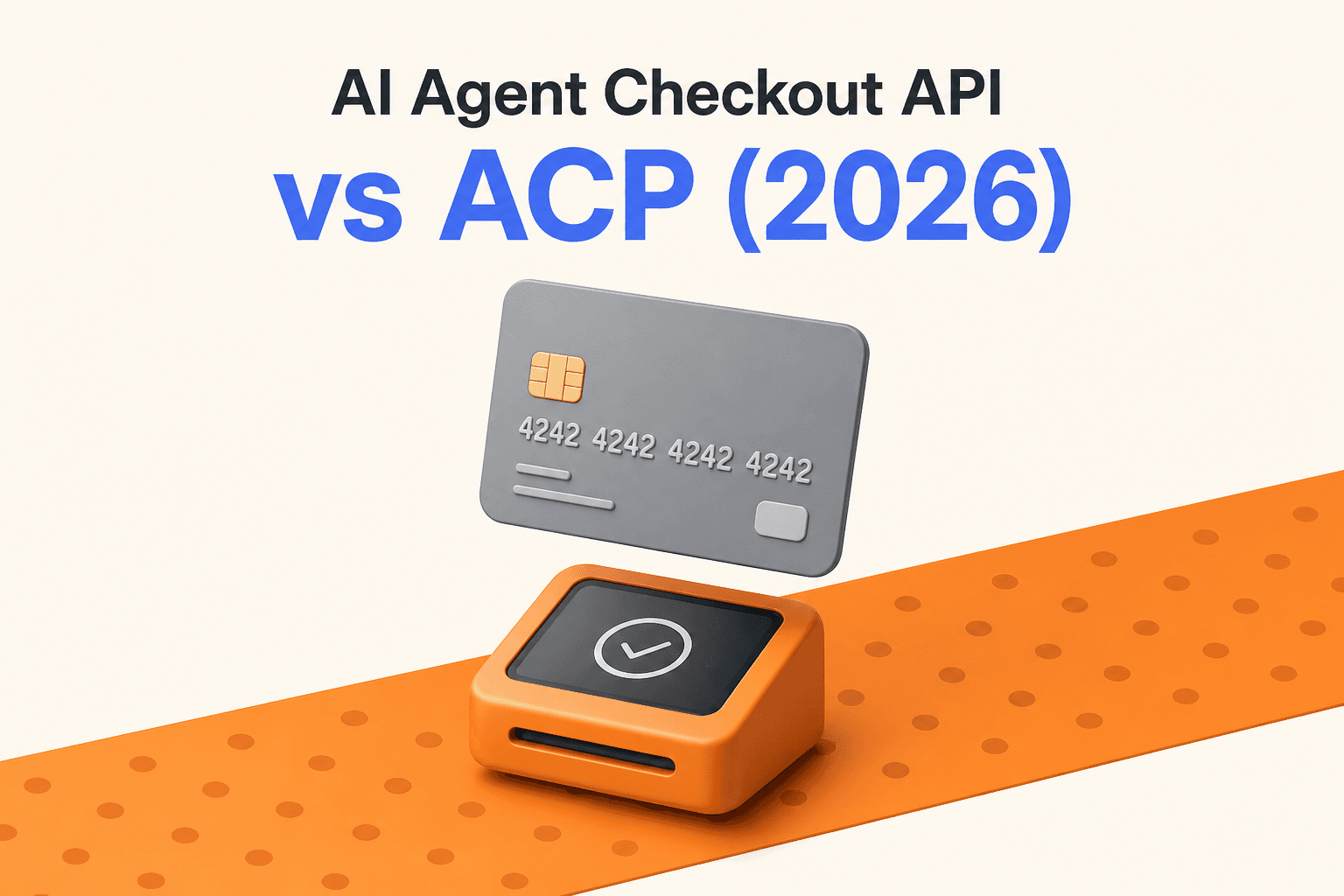
Those are merchant-side protocols: a store adopts ACP (OpenAI’s Instant Checkout, paid with Stripe’s Shared Payment Token), UCP or AP2 so agents can buy from it, and an agent can only buy where a merchant has signed up. Zinc needs no merchant opt-in: it places the order at Amazon, Walmart or thousands of other stores on managed accounts, through the checkout the store already has. Use a protocol where a merchant offers one, and Zinc for every store that does not.
Both are the same API. The MCP connector at mcp.zinc.com/mcp exposes search, offers, details and ordering as tools for Claude, Cursor and other MCP clients. REST gives you the same endpoints for an agent you run yourself. The published Agent Skill teaches a coding agent the API so it can write the integration.